AT A GLANCE
Sugar shaped St. Kitts for centuries. Its legacy includes plantation sites, industrial remains and railway infrastructure, but also the lives of enslaved people and later workers. The island’s sugar industry closed in 2005.
- Landscape
- Estates, mills and railway
- Central factory
- Officially opened in 1912
- Industry closure
- 2005
Sugar was more than a crop
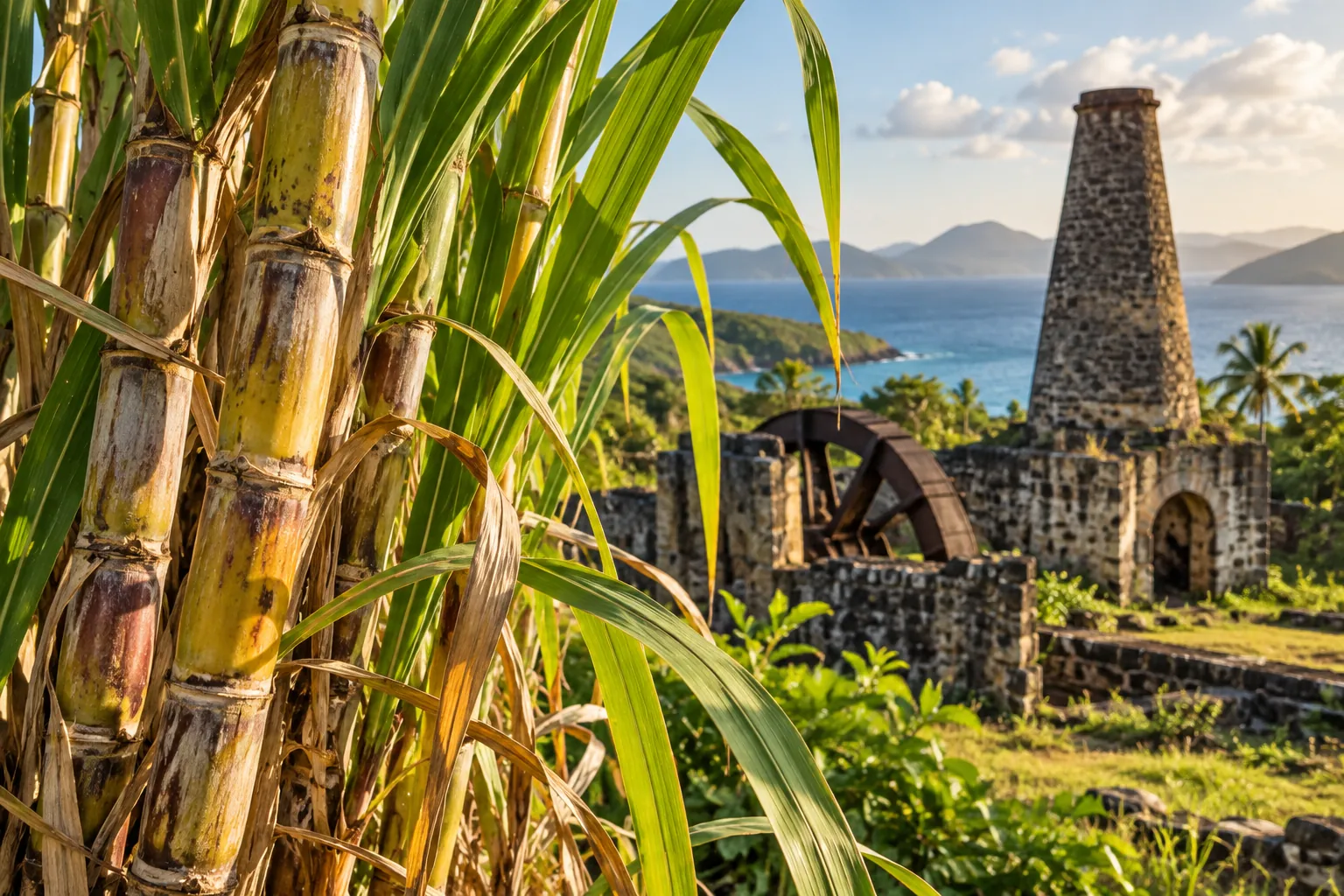
The National Archives describes the shift from crops such as tobacco, cotton and indigo toward sugar in the seventeenth century. Sugar production required substantial investment in land, equipment and processing. The result was a landscape organised around estates and the work needed to keep them operating.
For a visitor, the most useful question is not simply “Where was the sugar grown?” Ask where it was processed, how it moved and who performed the work. A field, a stone wall and a railway line can be parts of the same story. Looking at those connections changes the way an island tour is understood.
Keep people at the centre of the story
Plantation history includes the forced labour of enslaved Africans and their descendants. The National Archives’ account of Wingfield and Romney records enslaved workers’ housing, family lives and struggles. These were places where people lived under coercion, not simply picturesque estates producing an attractive commodity.
Later sugar history also belongs to agricultural and factory workers, skilled tradespeople and labour organisers. When visiting a heritage site, look for interpretation that explains working conditions and social change. If a tour concentrates mainly on owners and buildings, ask your guide what is known about the people whose labour sustained them.
From estate works to a central sugar factory
A central factory at Basseterre officially opened in February 1912. The move toward central processing changed how cane was transported and how work was organised. St. Kitts Scenic Railway dates its original cane-carrying railway construction to 1912–1926; the visitor railway today gives that infrastructure a different role.
The sugar industry closed in July 2005. That date marks an industrial transition, not the disappearance of the people, knowledge or places connected with sugar. Read the railway guide if you want to connect a present-day excursion with its original purpose. Do not assume former factory land is an open visitor attraction; ask about authorised access.
How does sugar cane connect with rum?
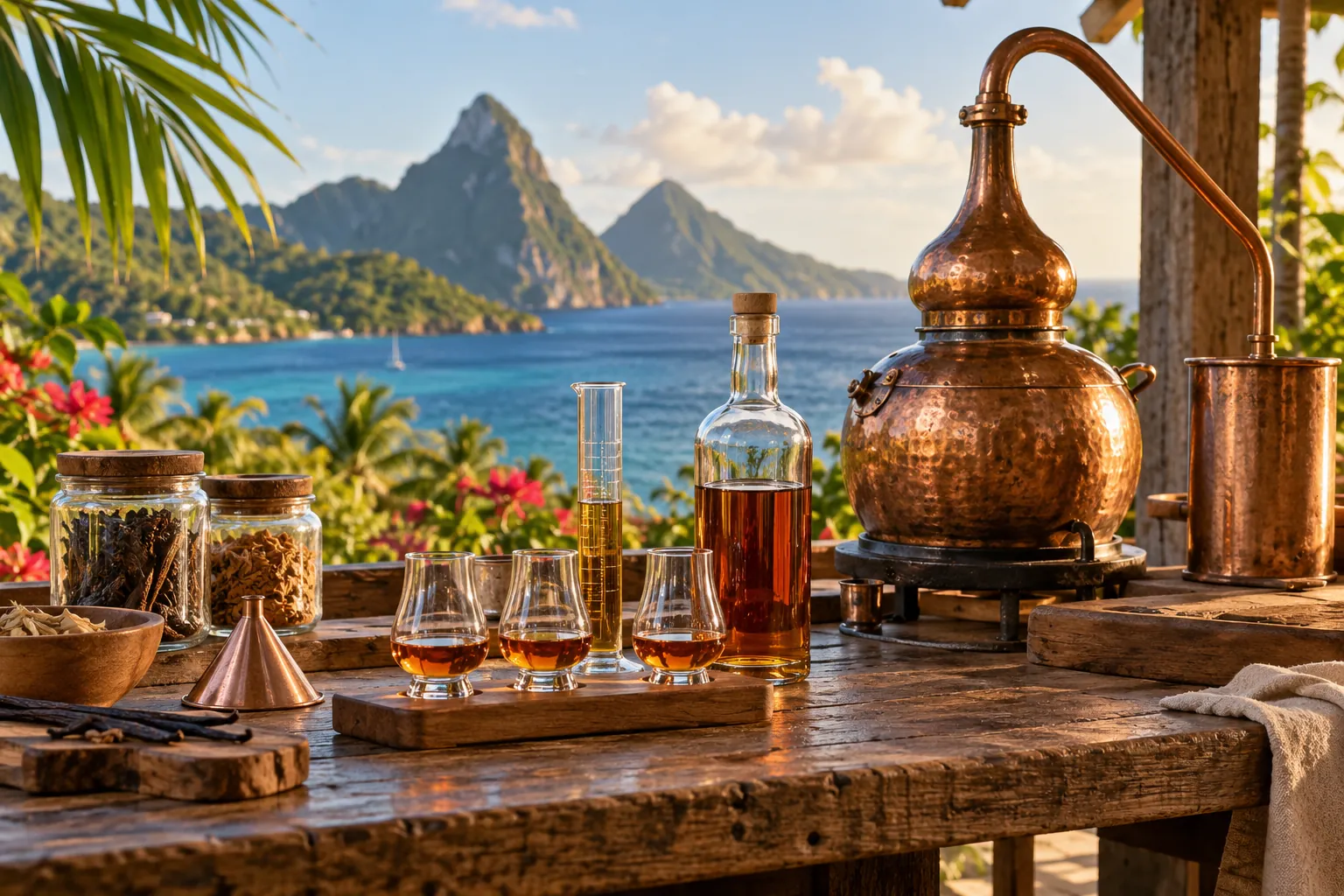
Cane also connects this history to Caribbean rum. WIRSPA explains that rum begins with fermented sugars from cane juice or molasses. Molasses remains after sugar crystals are removed during processing; fermentation produces alcohol, followed by distillation. That broad production story helps explain why sugar and rum are so often discussed together.
A modern visitor class is a different experience from watching an entire agricultural and industrial production cycle. At Academy of Rum St. Kitts, the focus is a guided, hands-on rum experience at Carambola. Our rum tasting and making guide helps distinguish a class, a tasting and a distillery visit.
Where can visitors explore this heritage?
Start with Wingfield Estate and Romney Manor for a focused look at estate history, or use a museum visit in Basseterre to build context. Match the visit to your interest: archaeological remains, craft, transport history and social history offer different ways into the subject.
Read signs, use established visitor areas and ask before entering ruins or working premises. Bring questions to your guide: Which structures survive? What was their function? How has the interpretation changed? A thoughtful visit can connect the beauty of today’s landscape with the difficult history and continuing lives behind it.
Your questions, answered.
When did the St. Kitts sugar industry close?
The National Archives records its closure in July 2005. Former industrial and estate landscapes remain part of the island’s history.
Was the scenic railway originally used for sugar cane?
Yes. It was built to carry cane to the central factory. Today’s visitor excursion has its own route and booking arrangements.
Can I learn about rum while visiting St. Kitts?
Yes. Read about Academy of Rum St. Kitts for a hands-on class, or explore our rum guide to compare different types of experience.
Sources & further reading
Natural history and destination background are linked below. For our activities, the experience pages contain the current published details. Confirm schedules and arrangements for your travel date. How we prepare these guides.
MAKE IT PART OF YOUR VISIT
Academy of Rum St. Kitts
Create, flavour and bottle your own rum in a guided 90-minute class at Carambola Beach Club, St. Kitts. Explore live dates and single or shared tickets.
Explore this experience